
The Dutch language is not the only thing you have to learn when you move to the Netherlands, it’s Dutch social rules too. Some are unspoken. You’ll stumble upon them when you least expect it. Some make sense. Some Dutch social rules though may baffle you. They may seem weird at first. But you’ll get used to them. Or not.
1. The Birthday Circle
The unsuspecting guest invited to their first Dutch birthday ‘party’ is in for a surprise. Dutch birthday gatherings will baffle the non-Dutch guest.
Chairs are aligned in a circle, which means late arrivals have to clamber over a great aunt or neighbour to get to an empty seat.
As you enter the room everyone congratulates you personally with the host’s birthday. As in “Gefeliciteerd met je <<insert your relationship to the host here>>. The first time this happens you will be extremely confused, thinking maybe the ‘party’ is being thrown for you and you have forgotten your own birthday.
Tip: You can refine your own Dutch birthday circle hosting skills with this 9 step plan.
Next, everybody talks at once, either to their neighbour or to someone on the other side of the circle. Which makes your new Dutch conversational skills irrelevant. Not only can you not make out what someone is saying to you, they cannot hear your response anyway. Smile and nod.
You will be given a cup of coffee and a soggy cracker. Later you will be handed a piece of birthday cake. Alcohol may or may not make an appearance. Should it make an appearance the conversational aspect of the birthday gathering will either get easier (because you stop caring) or get harder as the volume rises.
No matter how long you live in the Netherlands this is one of the Dutch social rules you are unlikely to a). understand b). truly ever get on board with. COVID-19 has had some benefits when it comes to Dutch birthday celebrations. Sorry, but it is true.
2. Birth of a Baby
One day a stork appears to have crashed through your neighbour’s front window. A board welcoming <<insert name>> to the neighbourhood appears in the garden and perhaps a washing line filled with baby clothes. Congratulations are in order, there’s a new baby in town.
If you know the new parents you will receive a card announcing the birth. The card will include all the details you didn’t know you needed to know: when the baby was born, the weight and length of the baby and when you may visit.
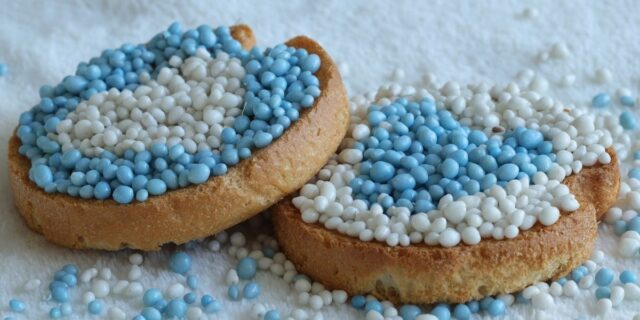
When you visit you will be handed a cracker with pink or blue sprinkles on top, depending on whether the new arrival is a boy or girl. This is beschuit met muisjes.

This ritual is definitely an improvement on the birthday circle, but another of the Dutch social rules that requires some getting used to.
3. Hallo Met…..
When you call a Dutch person on the phone they will answer with the words ‘Hallo, met <<insert their name here>>’. This may baffle you at first but you will soon get used to it. Presumably you know exactly who you called, so this is perhaps an overbodig ritual, but it’s habit and habits die hard.
A long time ago people had landlines. Any member of the household could pick up the phone. And so it was certainly handy to let the caller know who they had on the line. These days mobile phones are the norm and it is unusual for a random person to answer a phone that is not theirs. But Dutch people still answer their mobiles with their name.
Funnily enough, when I was a kid, we answered the phone by reeling off our telephone number. That way wrong callers could instantly realise their mistake and apologise and hang up. The name thing gives callers a similar opening I guess.
4. The Birthday Calendar
If you go into any downstairs toilet in a Dutch house you will likely see a birthday calendar hanging on one of the walls. This is a social rule I have totally and utterly embraced. At first it does seem weird. But it makes total sense.
It’s a room you go into at least daily and you have time to peruse so are sure to see upcoming birthdays and plan accordingly.
Plus this method of recording birthdays (instead of writing them anew on a calendar at the start of every year) fits in with Dutch frugality. You can keep the same calendar for decades, simply crossing off the birthdays of those that have manage to piss you off and adding new friends or family members as they come along (which is when the cards announcing births from social rule 2 comes in handy).
5. Three Kisses
The Dutch social rules around greeting someone who is a regular acquaintance, friend, or family member are clear. Three kisses. On the cheeks. Both of you kissing simultaneously. Which, as you can imagine, can get messy. Which cheek first? Air kiss or actual ‘smack on the cheek’ kiss?
The same happens with farewells too.
If you are male you ‘three kiss’ women, but not men. Women ‘three kiss’ both female and male friends and family. Teenagers and younger are not usually subject to the three kiss rule, much to their relief.
Birthday party guests are subject to three kisses, usually whilst simultaneously uttering “gefeliciteerd met….”. Hopefully Oma doesn’t have a mouthful of soggy cracker whilst this is happening.
The COVID-19 pandemic has offered a little light relief for those not on board with this Dutch social rule as it is difficult for a Dutch person to get those kisses in from 1.5 meters away. Silver linings, small mercies and all that.

Over to You: Dutch Social Rules
What Dutch social rule have you found hard to get used to? Let me know in the comments below!
Reading Tip: Want to understand more about Dutch culture? Read Why the Dutch Are Different.
*For your convenience, this post includes affiliate links to products and books useful for Turning Dutch readers. They cost you nothing more to buy, but I may get a small commission, which goes towards costs to keep the Turning Dutch site running.*
The post 5 Dutch Social Rules That Seem Weird at First appeared first on Turning Dutch.



 English
 Afrikaans
 Albanian
 Amharic
 Arabic
 Armenian
 Azerbaijani
 Basque
 Belarusian
 Bengali
 Bosnian
 Bulgarian
 Catalan
 Cebuano
 Chichewa
 Chinese (Simplified)
 Chinese (Traditional)
 Corsican
 Croatian
 Czech
Czech Danish
 Dutch
Dutch Esperanto
 Estonian
 Filipino
 Finnish
 French
 Frisian
 Galician
 Georgian
 German
 Greek
Greek Gujarati
 Haitian Creole
 Hausa
Hausa Hawaiian
 Hebrew
 Hindi
Hindi Hmong
Hmong Hungarian
 Icelandic
 Igbo
Igbo Indonesian
 Irish
Irish Italian
 Japanese
 Javanese
 Kannada
 Kazakh
 Khmer
Khmer Korean
 Kurdish (Kurmanji)
 Kyrgyz
 Lao
Lao Latin
Latin Latvian
 Lithuanian
 Luxembourgish
 Macedonian
 Malagasy
 Malay
Malay Malayalam
 Maltese
 Maori
Maori Marathi
 Mongolian
 Myanmar (Burmese)
 Nepali
 Norwegian
 Pashto
 Persian
 Polish
 Portuguese
 Punjabi
 Romanian
 Russian
 Samoan
 Scottish Gaelic
 Serbian
 Sesotho
 Shona
Shona Sindhi
 Sinhala
 Slovak
 Slovenian
 Somali
 Spanish
 Sudanese
 Swahili
 Swedish
 Tajik
Tajik Tamil
Tamil Telugu
 Thai
Thai Turkish
 Ukrainian
 Urdu
Urdu Uzbek
Uzbek Vietnamese
 Welsh
Welsh Xhosa
Xhosa Yiddish
 Yoruba
 Zulu
Zulu